
Floor & Decor looked at first like a standard retail technology conversation. The site visits quickly showed it was really a store operations problem: communication, tasking, product visibility, staffing, and workforce engagement were all directly affecting sales performance.
I led field research across multiple Atlanta-area stores to understand where those breakdowns sat, and how Zebra could respond with a sharper value story.
The challenge
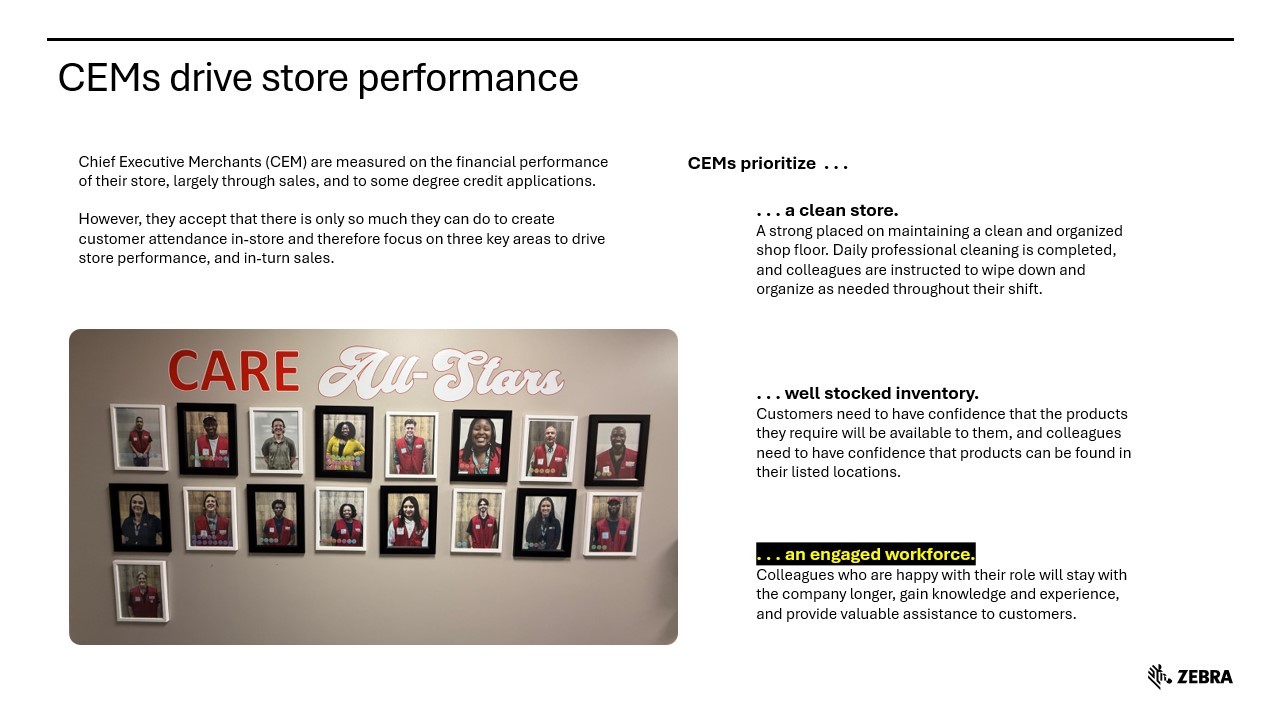
Chief Executive Merchants were trying to drive performance with incomplete, fragmented operational support
The visible issue was tools. The real issue was how Chief Executive Merchants, the store managers, were trying to drive performance with incomplete, fragmented operational support.
The stores were under different labor conditions, ranging from newer, smaller sites with a 1,000-hour budget and larger flagship ones with 1,250-hour budget, but the same priorities kept surfacing: keep the store clean, keep inventory available, and keep the workforce engaged.
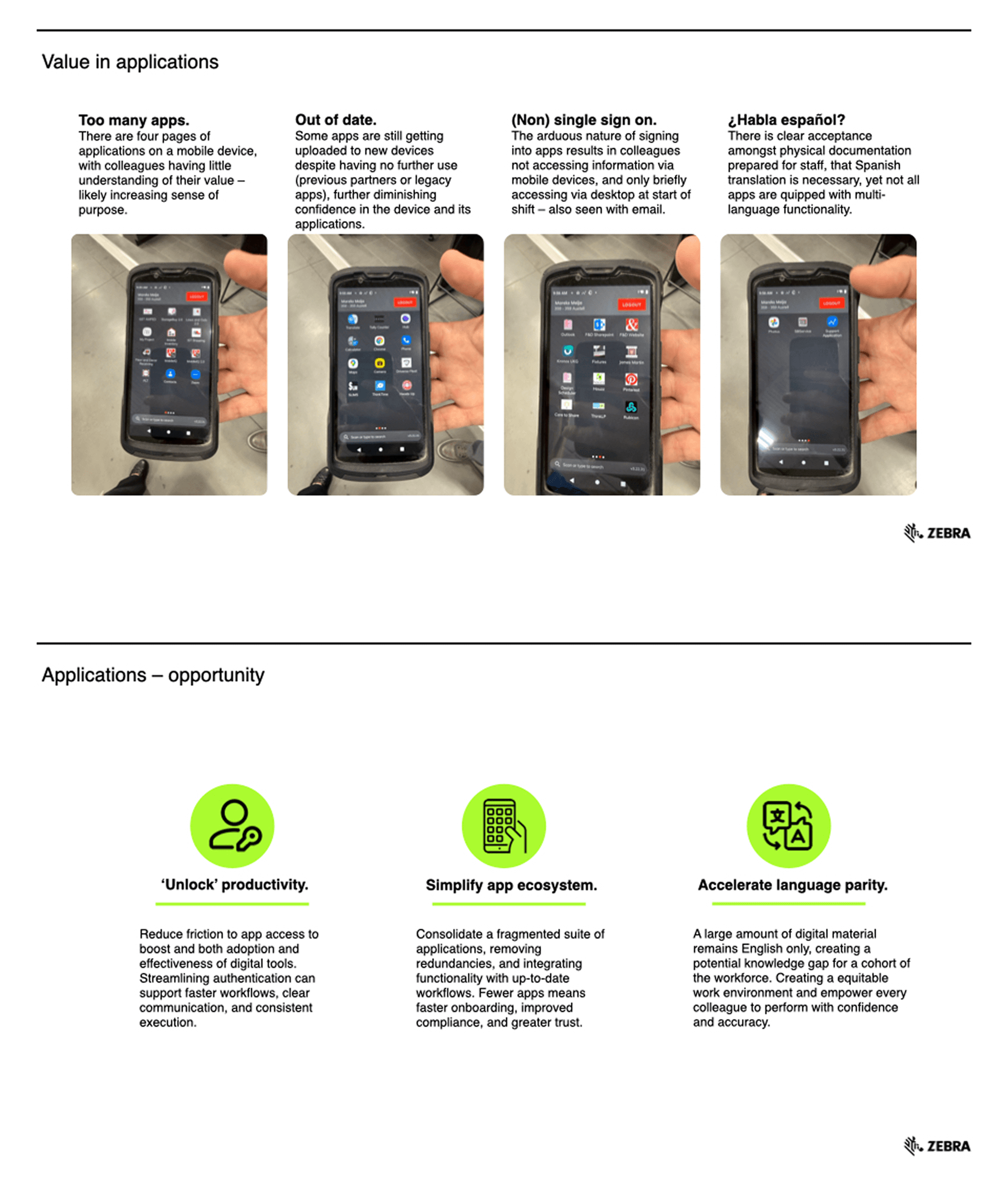
Underneath that, several structural problems were limiting performance: too many mobile apps with unclear value, weak single sign-on, English-only digital content in a bilingual workforce, manual and low-trust tasking, poor visibility into urgent price changes, device overload, missed calls from customers, low confidence in product-location accuracy, scanning challenges at height, and highly manual staffing and training processes.
The question was not just what technology existed, but which frictions were actually suppressing sales and execution.
My approach
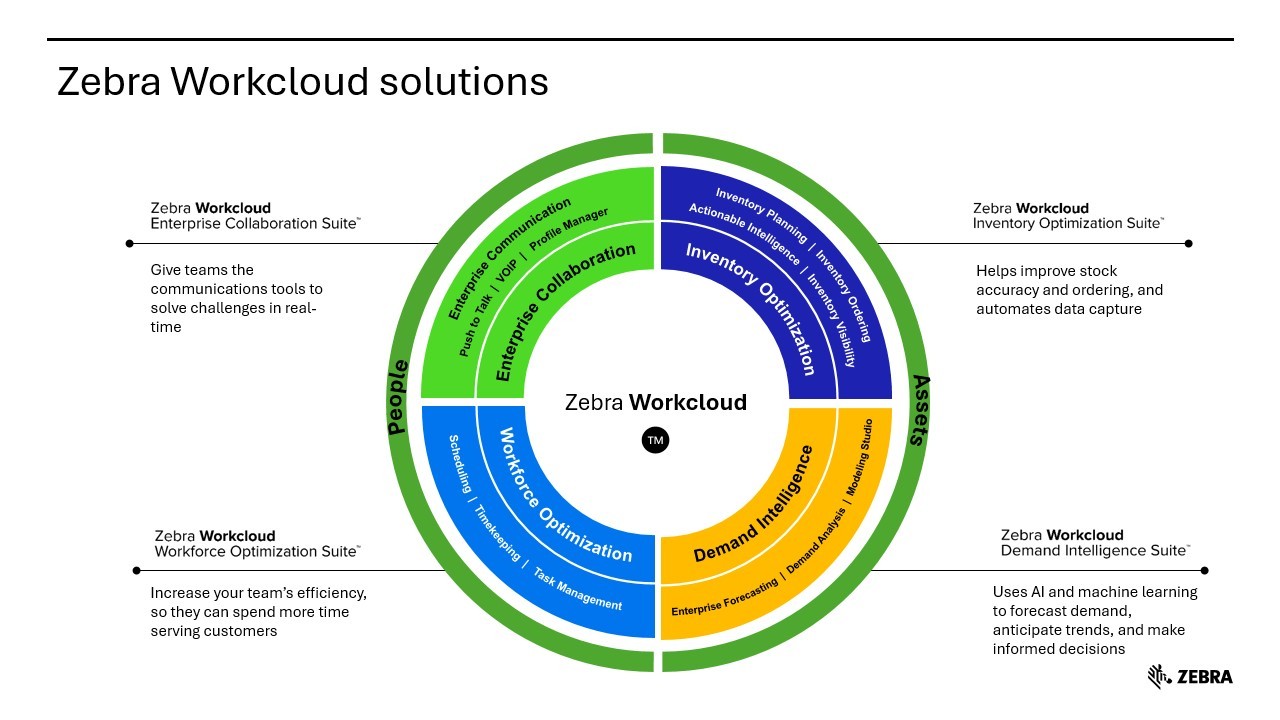
Use the site visit to connect frontline reality to business levers, not just to audit devices.
I structured the work around the same things store leaders cared about: sales, labor, execution, and customer service. That meant observing stores directly, speaking with leaders and associates, and synthesizing the findings into practical opportunity areas rather than an undifferentiated list of complaints. I looked at the operational role of communication, the trustworthiness of digital tasking, how product information was surfaced and updated, how much work was still being held together manually, and where workforce conditions were helping or hurting performance. The goal was to make the recommendations feel native to the store, not imposed from outside.
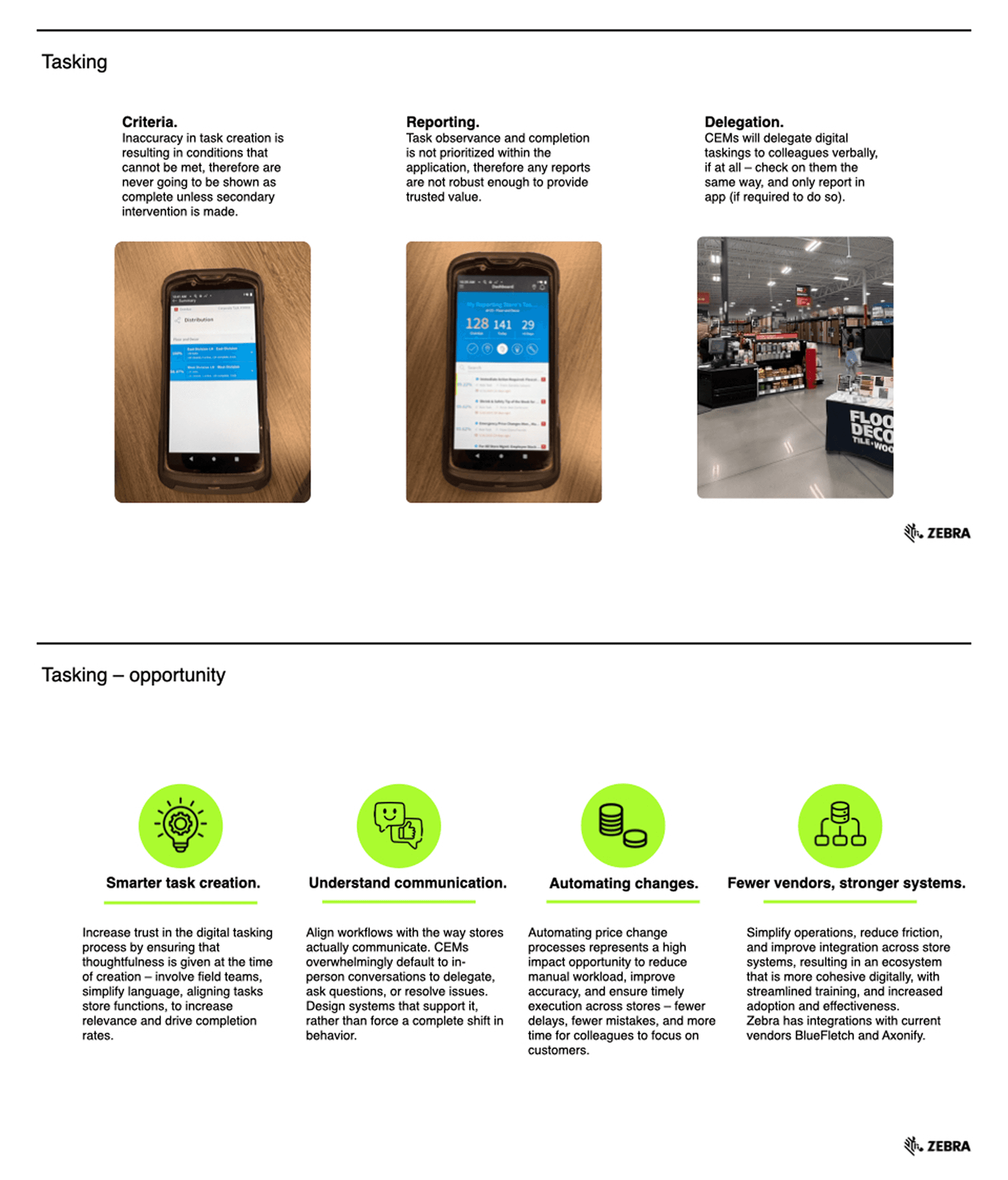
That approach made several patterns clearer. Workforce engagement was visibly different between stores, and that mattered because engaged colleagues were seen as an essential enabler of sales, not just a cultural bonus. Tasking was weak where criteria were inaccurate, delegation happened verbally, and reporting was not trusted. Urgent price changes emerged as one of the most demanding workflows, but they were disconnected from real-time tracking and automation. Product visibility suffered when associates no longer trusted location data, and scanning was hard when labels were small and positioned high. Staffing practices were still highly manual, with fixed skill definitions and inconsistent training capture. Rather than treat these as isolated pain points, I synthesized them into a set of operational levers that could improve trust, speed, and execution.
The impact
The work turned a broad retail conversation into a much more focused value case around communication, tasking, product visibility, and workforce agility.
Several of the clearest opportunities were practical rather than abstract: simplify the app ecosystem, improve language parity, reduce sign-on friction, tighten how tasks are created and tracked, automate high-volume price-change workflows, improve device ergonomics and communication tooling, increase trust in product-location systems through real-time accuracy, and modernize staffing support through better visibility into skills and scheduling. The resulting strategy did not try to “boil the ocean.” The next-step recommendation was to begin with Communications and Tasking, then continue into other areas through a value assessment and ROI exercise. That made the work decision-ready: clearer priorities, stronger connection to store performance, and a more credible path from field evidence to operational improvement.