
Multiple tools. Multiple logins. Multiple inconsistencies. Enterprise customers were navigating a fragmented digital ecosystem.
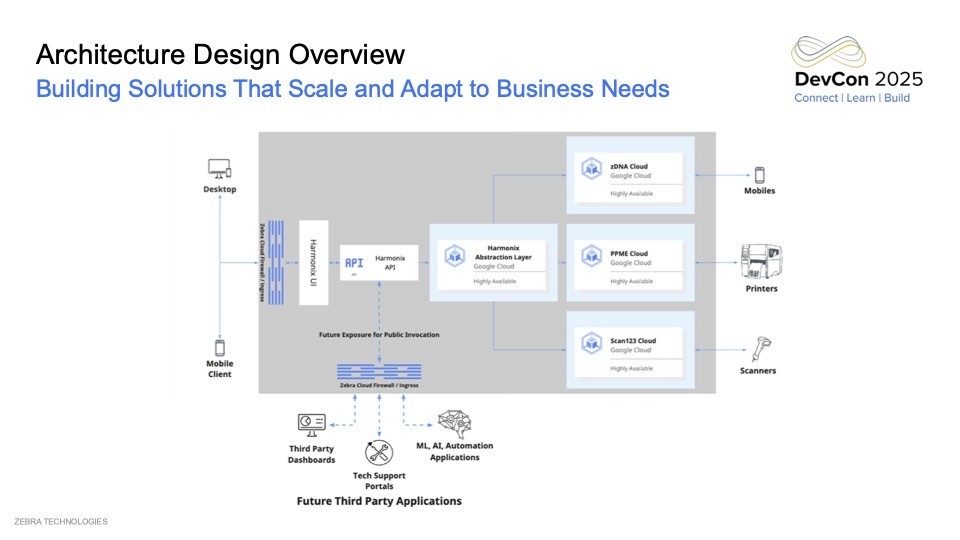
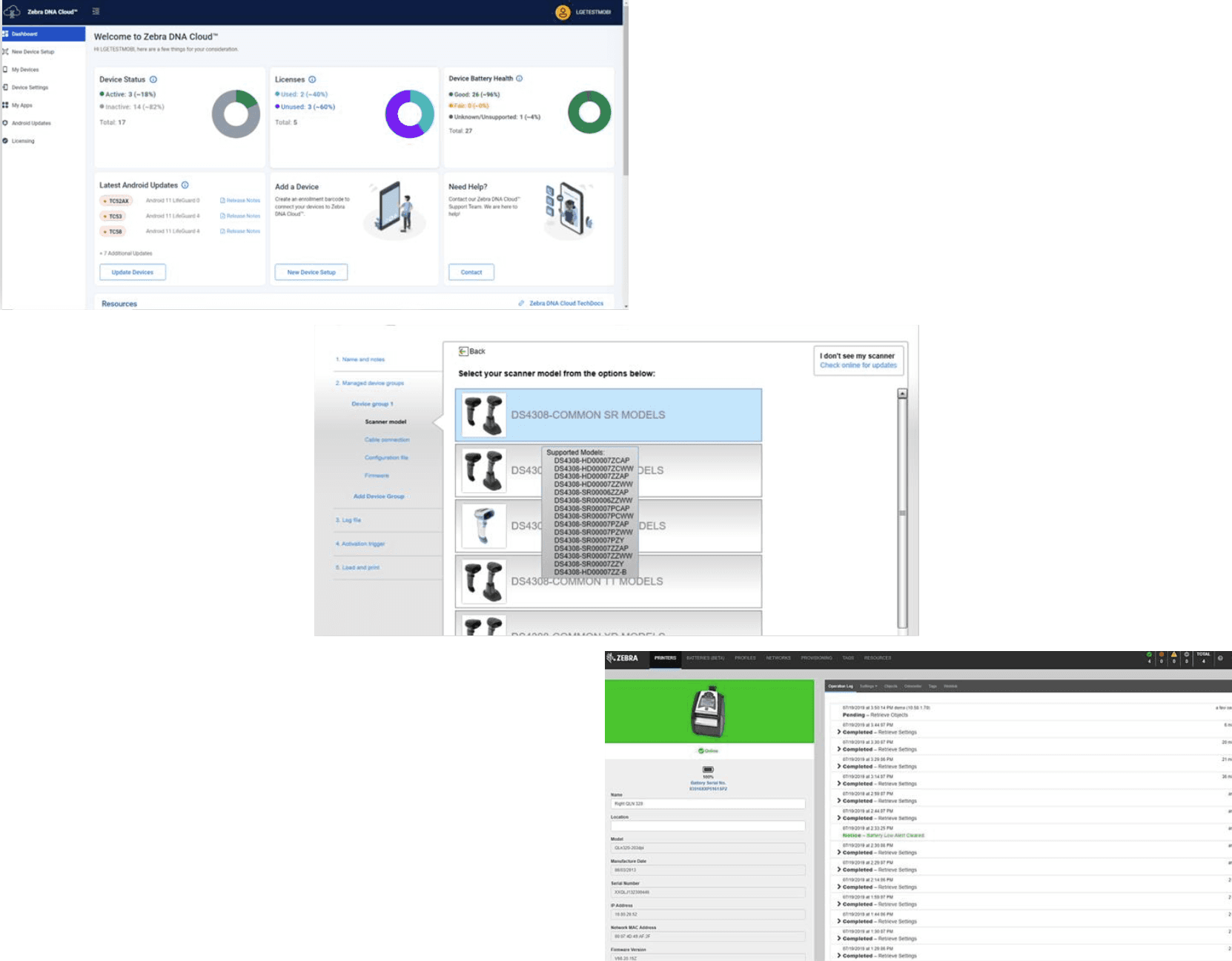
Zebra’s staging and management environment required customers to move between separate tools, hosting environments, and authentication systems. Navigation structures varied by product. Schema onboarding required heavy Data Ops involvement. Device admins were forced to context switch across platforms to stage, configure, and manage devices. The opportunity was not incremental UI improvement. It was digital consolidation.
The challenge
Self-service data onboarding required architectural validation.
Two core challenges emerged:
Navigation and Information Architecture:
Users struggled to locate key functions (bulk upload, device admin, customer hierarchy). Early usability testing revealed mis-clicks, incorrect CTA prioritization, and confusion between customer and system context.Data Onboarding Bottlenecks:
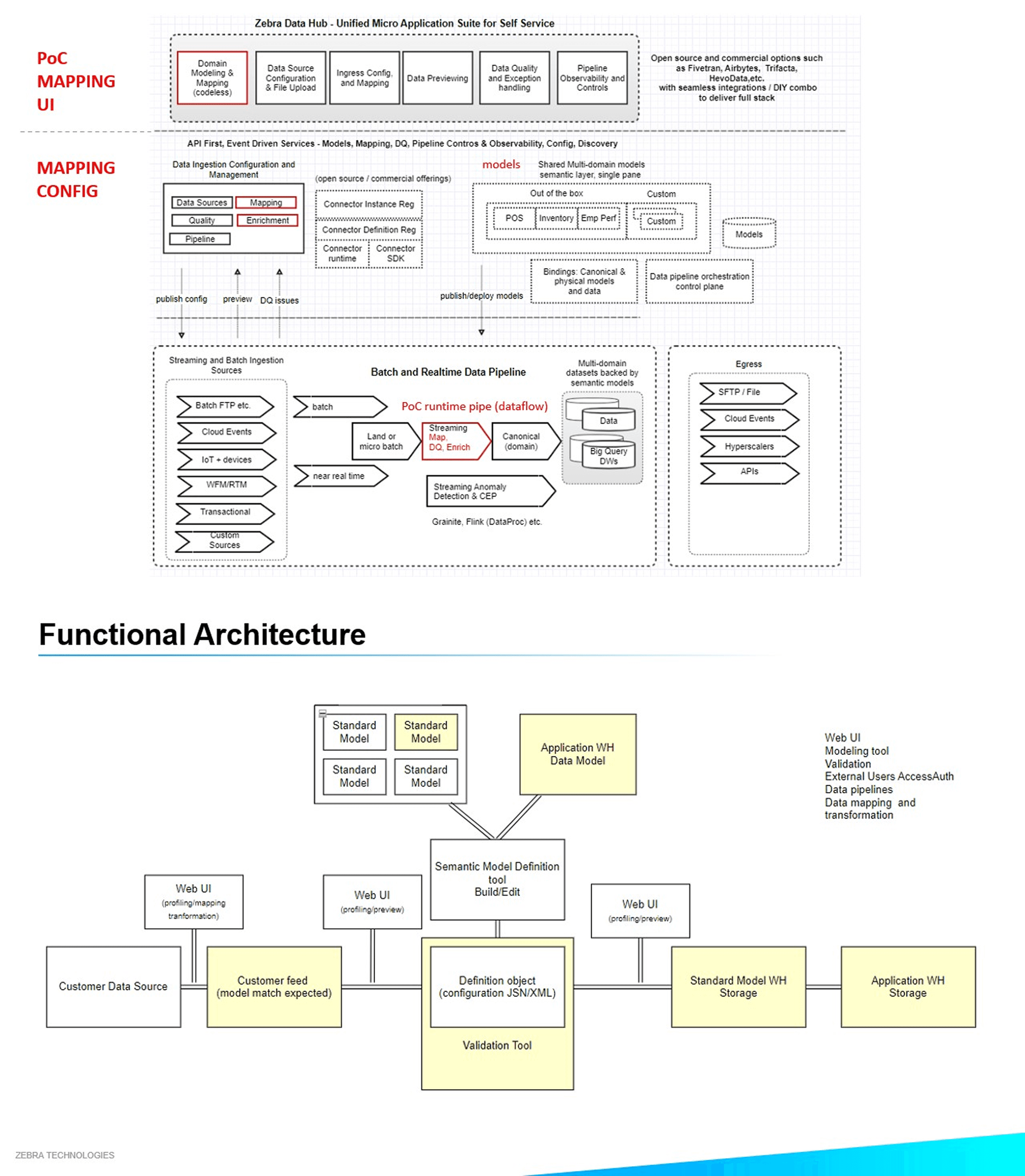
Customer data onboarding required extensive mapping, transformation, and validation by Zebra Data Ops teams. Time-to-value was slowed by schema variability and manual ETL intervention.
This was not a cosmetic UI issue, it was a systems design problem with measurable cost implications.
My approach
I led research and validation across navigation, usability, and data onboarding architecture.
I worked directly with product, engineering, and data teams to convert findings into roadmap decisions:
Multi-round navigation prototype testing
Quantitative survey analysis across 120 frontline users
Moderated usability testing (60–90 minute sessions)
Cross-competitive design analysis)
Data onboarding workflow validation with live customer data
Executive readouts influencing strategy
I structured the work across three focused validation tracks:
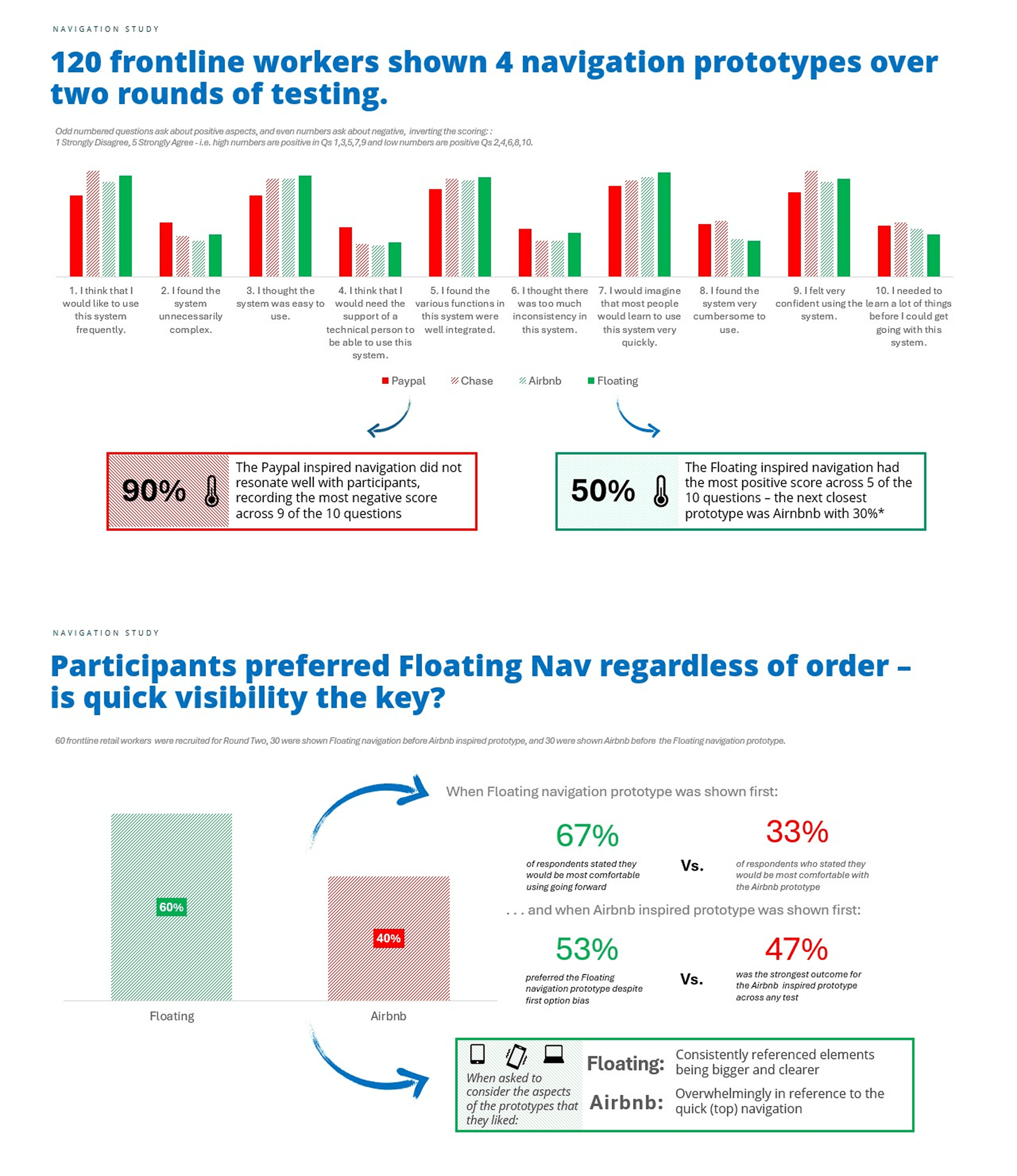
We ran a two-round navigation study with 120 frontline users, testing four prototype paradigms under a controlled scoring model (reverse-coded positive/negative prompts to reduce bias). This allowed us to compare usability sentiment quantitatively rather than relying on design preference.
I conducted moderated usability sessions using high-fidelity clickable prototypes to stress-test hierarchy, CTA prominence, and workflow logic. Sessions surfaced measurable mis-click patterns, confirmation expectations, and navigation misinterpretation that informed structural adjustments.
I partnered with engineering and Data Ops to validate self-service onboarding architecture through dual POCs, off-the-shelf and in-house. We tested real customer datasets, schema validation logic, pipeline orchestration performance, and cost implications to quantify trade-offs between vendor dependency and internal ownership.
The output was not UI feedback. It was evidence to guide platform-level decisions.
The impact
Navigation clarity reduces cognitive load more than visual polish. A strategic shift toward unified platform architecture.
Navigation clarity reduces cognitive load more than visual polish. Quick top-level visibility drove preference for Floating nav across exposure conditions.
Prominence overrides wording. Users select dominant CTAs even when terminology misaligns.
Fragmentation is a structural cost multiplier. Separate hosting environments and login states create systemic friction.
Schema standardization is leverage. Prescribing target schemas reduces variability and mapping overhead.
API-first architecture enables ecosystem scale. Unified APIs reduce dependency on manual UI workflows.
The research directly informed:
Zebra unified device management positioning
Floating navigation adoption
API-first product messaging
Schema validation integration within mapping workflows
MVP roadmap prioritization
Executive level buy vs. build decision frameworks
Instead of incremental UI updates, the program shifted toward:
Consolidated login architecture
Standardized onboarding workflows
Unified device dashboard visibility
Reduced tool sprawl
The outcome was not aesthetic refinement. It was platform consolidation driven by quantified evidence.