The Marks & Spencer 'Intelligent Store' engagement was not about forcing a Zebra answer onto a retail environment. It was about understanding where the real operational opportunity actually sat, even if that meant the answer was smaller, simpler, or outside Zebra’s immediate portfolio. The result was a sharper view of how staffing pressure, device overload, scanning burden, training gaps, and data overload were shaping store operations.
The challenge
The deeper challenge was how a retailer keeps stores running as resources contract.
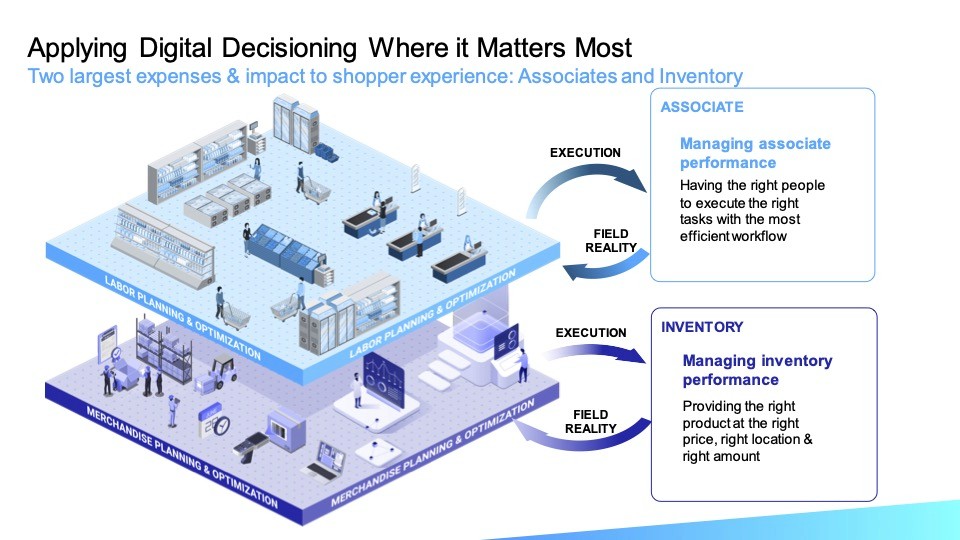
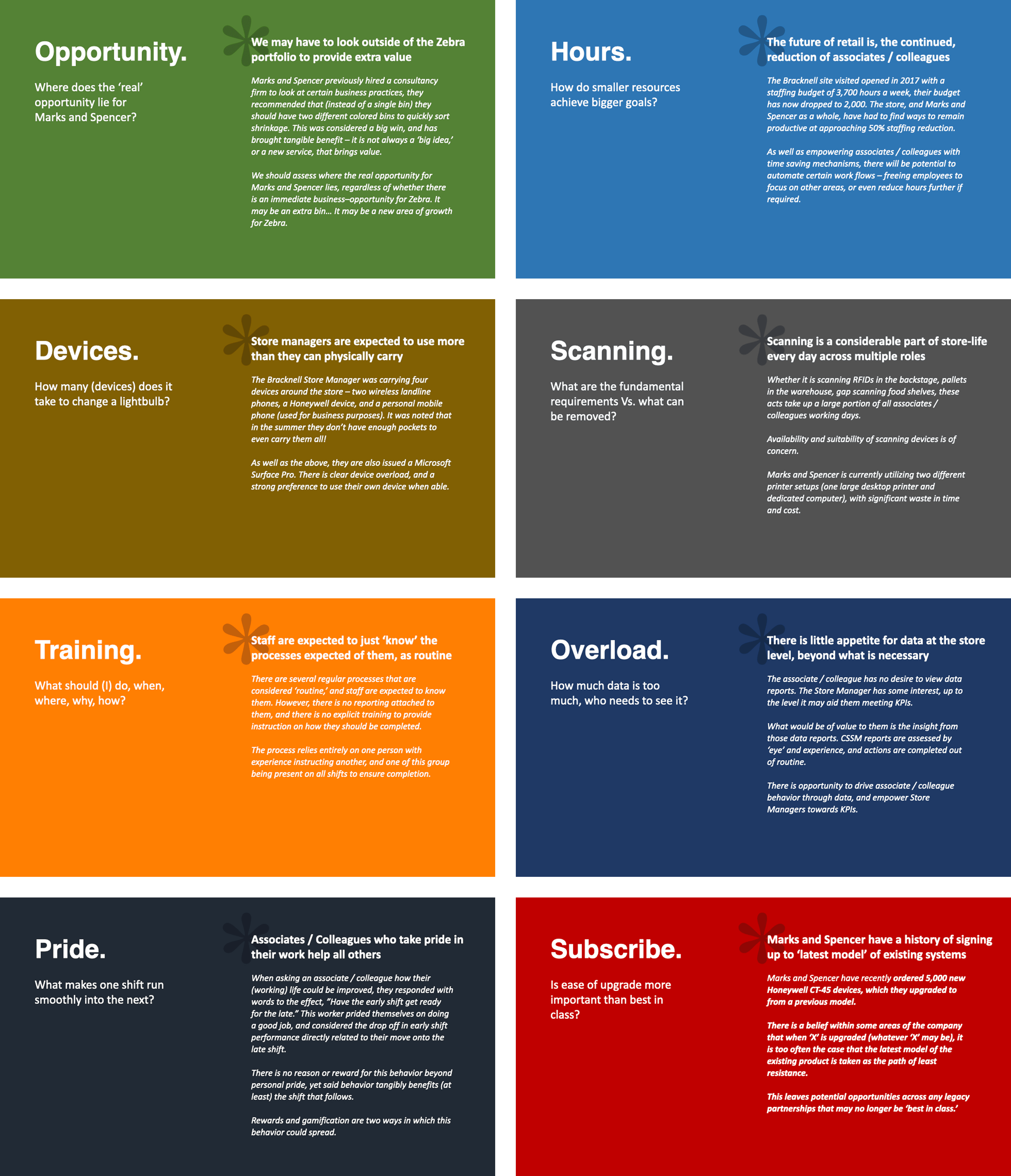
An example site had seen its staffing budget fall from 3,700 hours a week to 2,000 since opening in 2017, a near 50% reduction. That made the problem much broader than hardware selection. Store managers were already carrying more devices than they could physically manage, including multiple phones, a Honeywell device, and a Surface Pro. Scanning tasks consumed a large share of store time across roles, printer setups were fragmented and wasteful, and many “routine” processes depended on undocumented knowledge transfer rather than explicit training or reporting. At the same time, store-level staff had little appetite for raw data beyond what was necessary to hit KPIs, suggesting that more reporting alone would not solve the issue. The challenge was to identify where the real leverage sat: labor, devices, scanning, training, data interpretation, or shift-to-shift behavior?
My approach
Ethnographic engagements as opportunity-mapping exercises, not simply technology audits.
The framing of the work mattered. The source material explicitly pushes against the assumption that the answer must be a big new product or an obvious Zebra sell. Instead, the right question was where the real opportunity lay for M&S, regardless of whether there was immediate business opportunity for Zebra. I used the site-visit synthesis to structure the problem into practical lenses: Hours, Devices, Scanning, Training, Overload, Pride, and Subscribe. That allowed the work to separate symptoms from levers and to distinguish what was a technology problem from what was really a labor, process, or operating-model problem.
This way of structuring the research turned the visit into a decision-ready view of the store. Reduced staffing was not just a background fact, it was shaping every other constraint. Device overload was not just inconvenient, it showed that managers were being asked to carry and switch between too many tools. Scanning was not one task, it was a major part of daily store life across backstage, warehouse, and shelf work. Training was not just an HR issue, it exposed how the operation depended on implicit knowledge and the presence of experienced staff. And “Overload” clarified that the real value of data at store level was not more reports, but actionable insight.
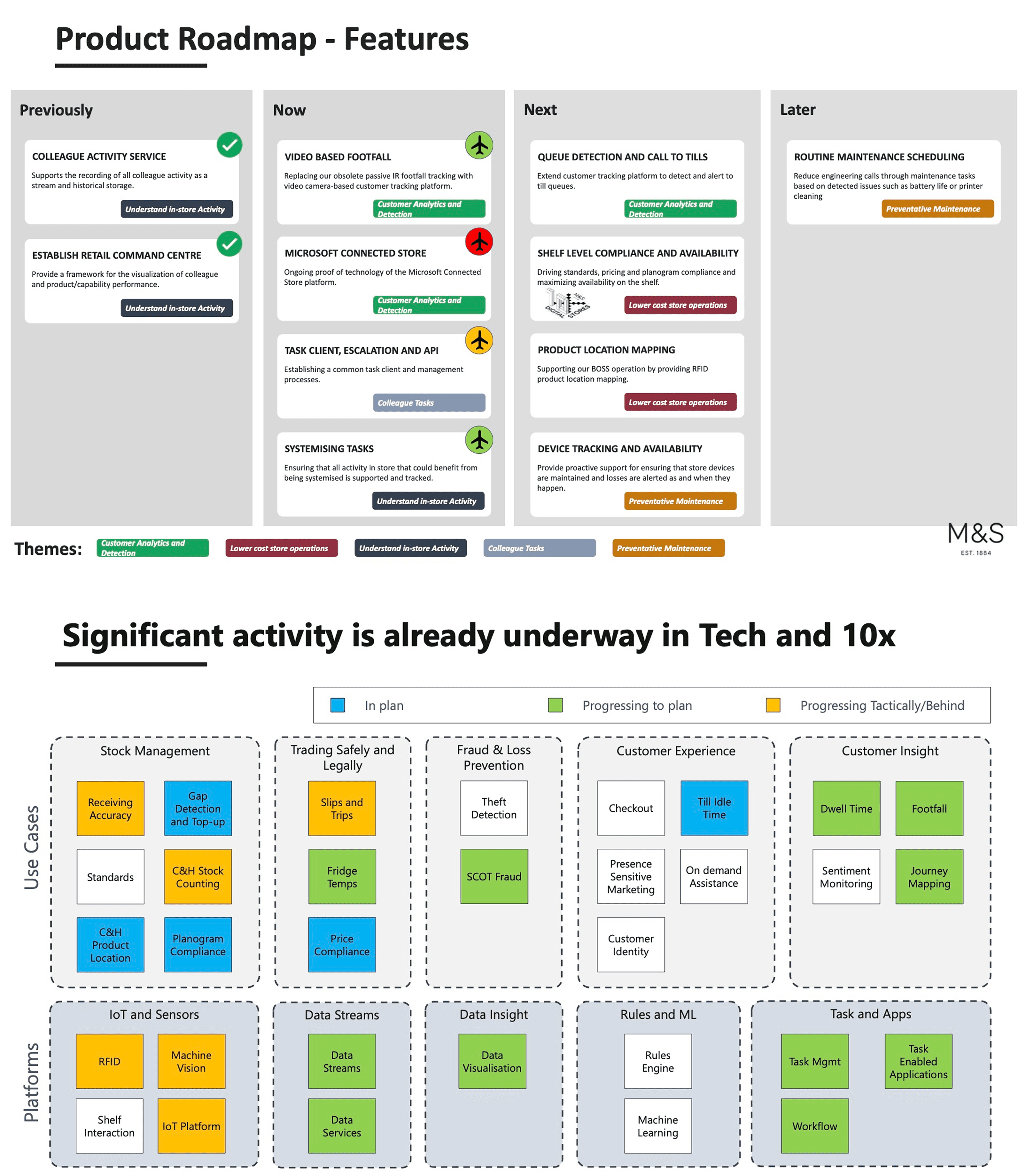
The impact
The work reframed the opportunity from “what Zebra can sell” to “what M&S actually needs in order to operate better.”
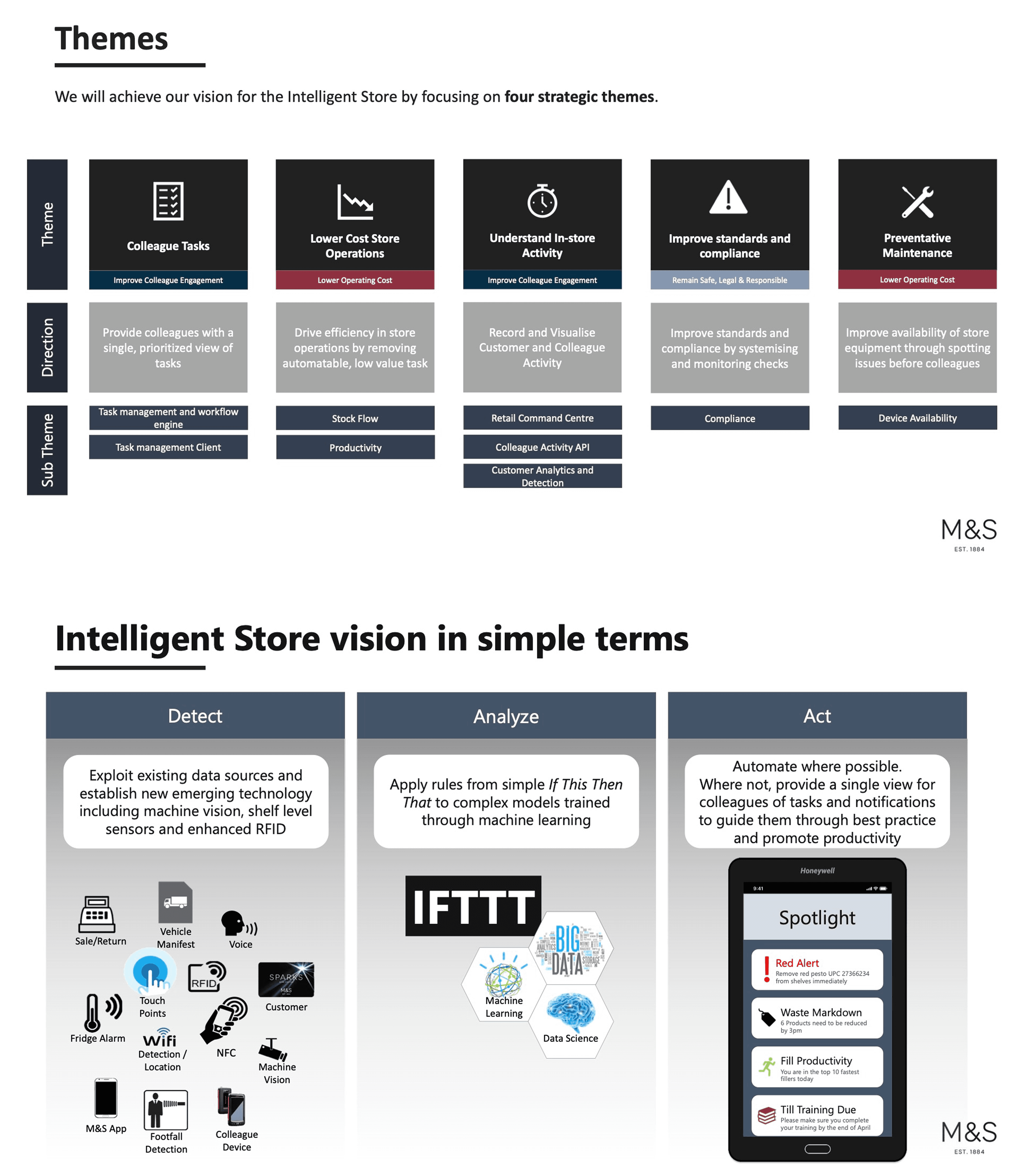
That reframing produced a much more useful strategy lens. It highlighted where automation or workflow simplification could help offset staffing reductions, where device consolidation or better fit-for-purpose tools could remove practical strain, and where operational wins might come from surprisingly small interventions rather than major platform shifts. It also sharpened the role of insight versus data: associates did not want reports, but store managers could benefit from clearer interpretations tied to KPIs and action.
One of the most revealing observations was about pride, the idea that one shift preparing well for the next created tangible downstream value, despite there being no formal reward structure for that behavior. That insight opened the door to thinking about rewards and gamification as behavioral levers rather than purely operational fixes.
Overall, the work created a more honest and valuable picture of the store environment: not just where technology existed, but where smaller operational changes, better-fit tools, clearer training, and more usable insight could have disproportionate impact.