
Medtronic’s Field Inventory Analysts (FIAs) operate as the last-mile orchestrators of distributed medical inventory across trunks, hospitals, warehouses, and peer networks. On paper, the role centers on scanning and reconciliation. In reality, it functions as a real-time triage engine layered on top of fragmented systems and inconsistent data reliability. I led a deep field investigation to understand what the role actually is, and where structural gaps were creating artificial work.
The challenge
Unpredictability is constant. The system depends on personal vigilance instead of structural resilience.
The FIA day is shaped by add-on cases, “patient on the table” calls, overnight messages, missing product mid-procedure, and reactive transfers. Systems are fragmented across IMI, Insights, MStar, Excel heat maps, Salesforce, MMX, Email, Teams, and GroupMe. Data reliability is inconsistent: MStar is described as “live or die by,” yet noted as only ~50% accurate in practice, with serialized accuracy targets at 90% and lot accuracy targets at 40%. Warehouse redistribution takes 3–4 weeks; field redistribution takes 1–2 days. The result is constant cross-checking, detective work, and physical driving to compensate for digital opacity.
My approach
I led the strategic research effort from immersion to executive alignment. My responsibility was to turn field reality into decision grade clarity.
The impact
The FIA role is anticipatory intelligence compensating for system design limitations. The outcome wasn't a feature list, it was strategic realingnment.
The visible work, scanning and transfers, is only a fraction of the role’s value. The real contribution lies in cognitive modeling: balancing trunk vs hospital vs warehouse inventory, managing case risk and expiration risk simultaneously, running redistribution scenarios mentally, and mediating across competing incentives. Current tools are built to record transactions, not forecast risk. As a result, physical movement substitutes for predictive visibility. The strategic north star that emerged was clear: Drive Less. Orchestrate More.
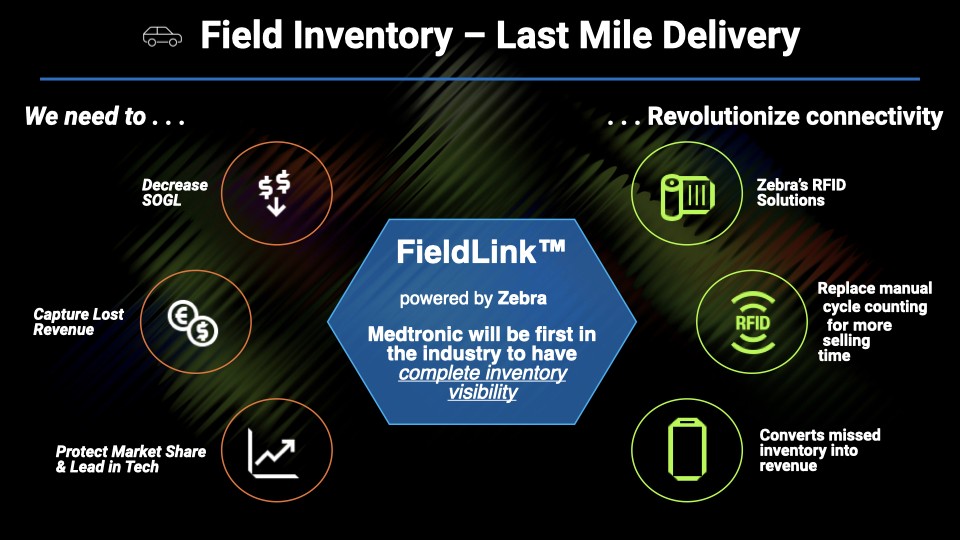
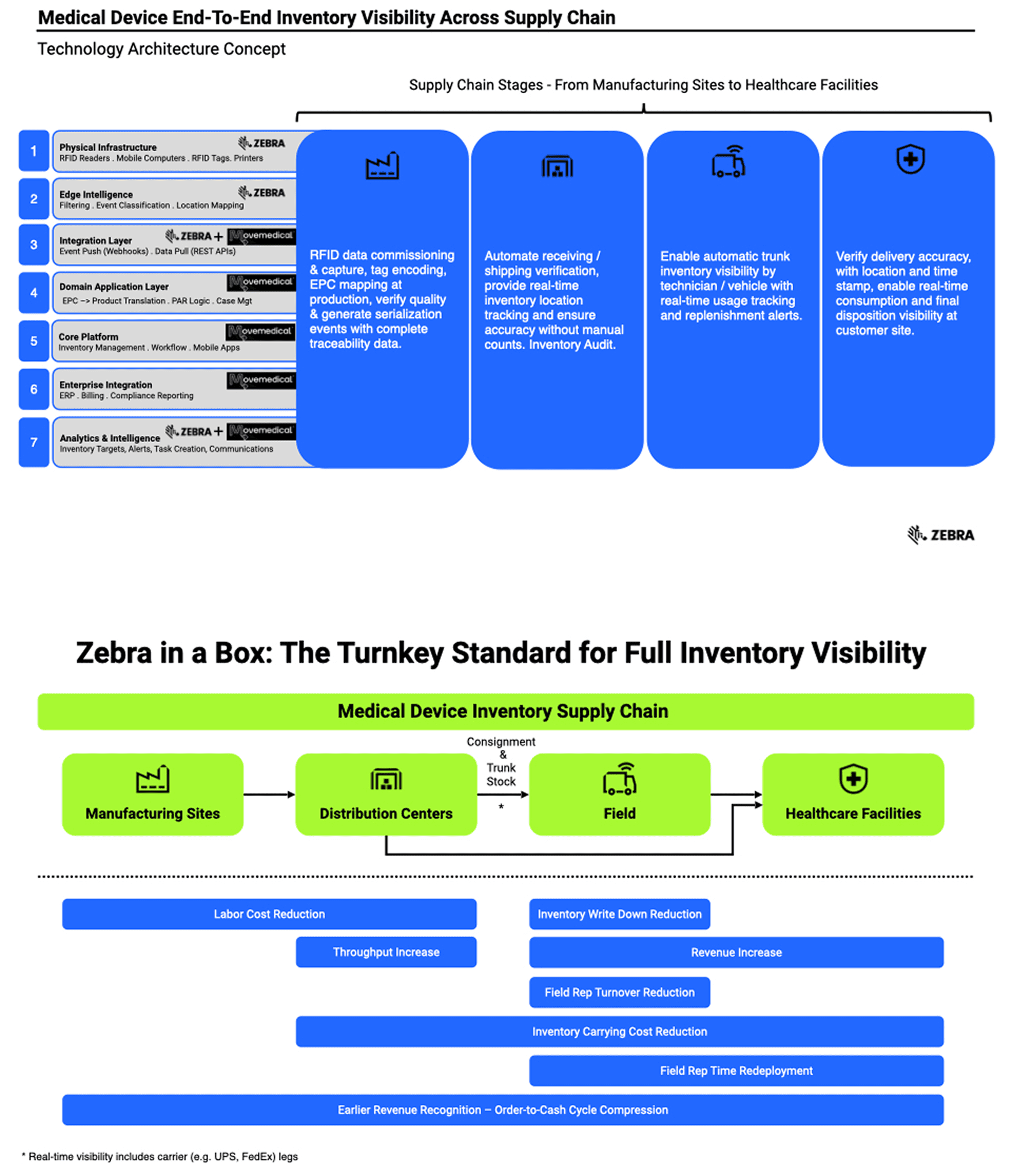
The research reframed the FIA from cost center to revenue and risk lever. It clarified where technology should augment human orchestration rather than replace it and directly informed executive conversations around FieldLink™ and RFID-enabled end-to-end visibility.
Opportunity areas defined through the work included:
Unified inventory dashboard across IMI, Insights, MStar, and field systems
Location-level visibility (trunk, hospital, hub)
Predictive short-date matching and auto-suggested swaps
Pre-case validation alerts
Time-to-expiration routing logic
Formalized, system-supported field redistribution
By externalizing invisible cognitive load and aligning stakeholders through service design, the work positioned predictive visibility, not reactive driving, as the path to reduced write downs, earlier revenue recognition, and stronger field resilience.