Mobility Studies started from a simple problem: customer engagements were generating value, but the way they were run varied too much to scale. I helped shape a more structured assessment model that standardized discovery, ethnography, reporting, and follow-through, with Lite and Full tiers designed to match the size of the opportunity. The result was a more consistent way to uncover insight, create action, and position Zebra more strategically with customers.
The challenge
Teams were doing useful work, but the operating model around that work was inconsistent .
That inconsistency was enough to undermine confidence and accountability.
The core issue was laid out very clearly in the source material: current practices varied greatly across engagements, resulting in inconsistent data and unclear next steps. Follow-up actions were not routinely taken, outcomes were not measured in a quantifiable manner, and insights were not well communicated across Zebra. In other words, the organization had proof that this kind of customer work could create opportunity, but not a dependable framework for doing it well. The challenge was to create a consistent customer engagement model that could uncover insights, action opportunities, and maximize potential bookings without feeling ad hoc every time.
My approach
Formalize the engagement structure, then design for scale.
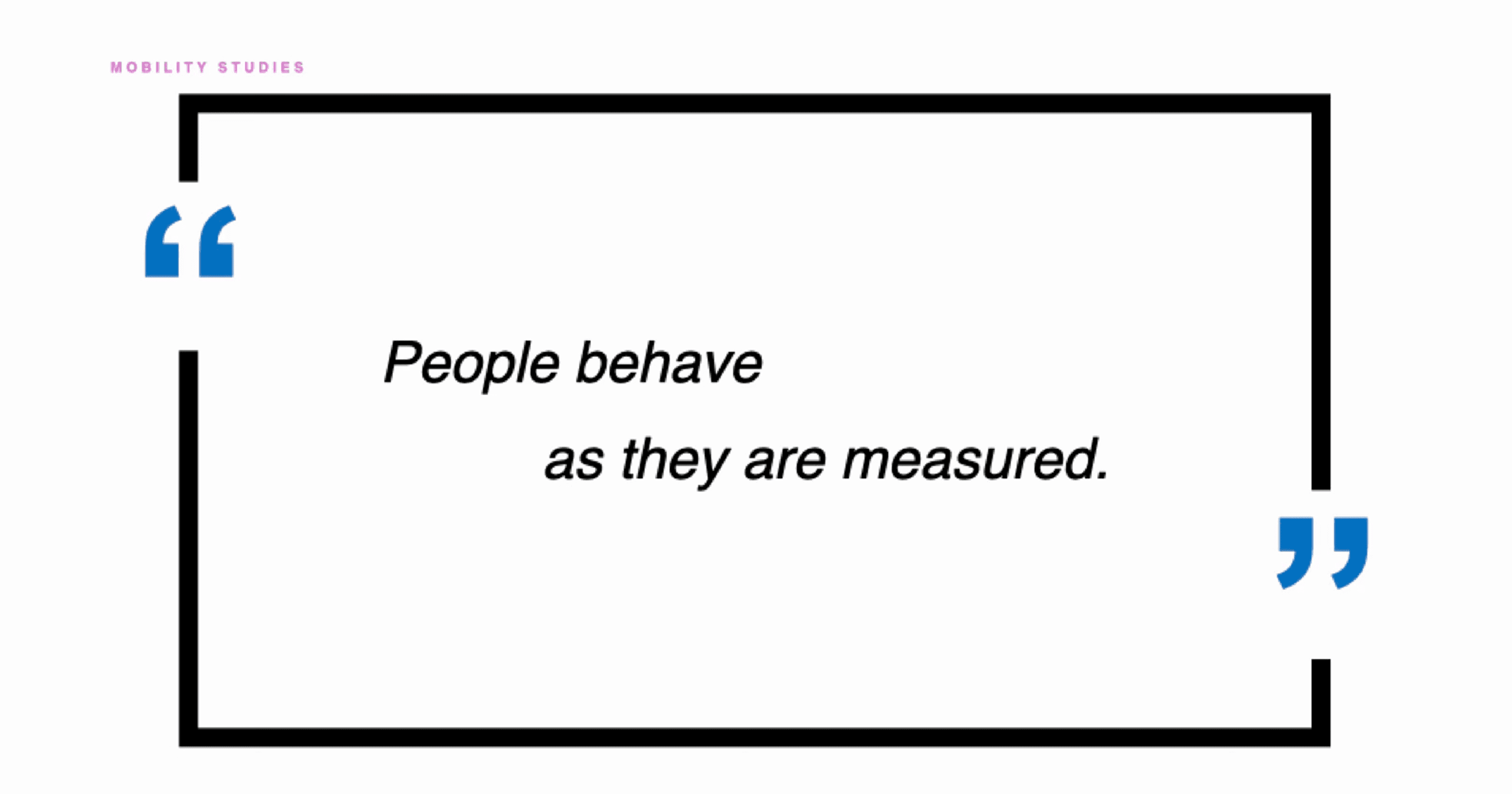
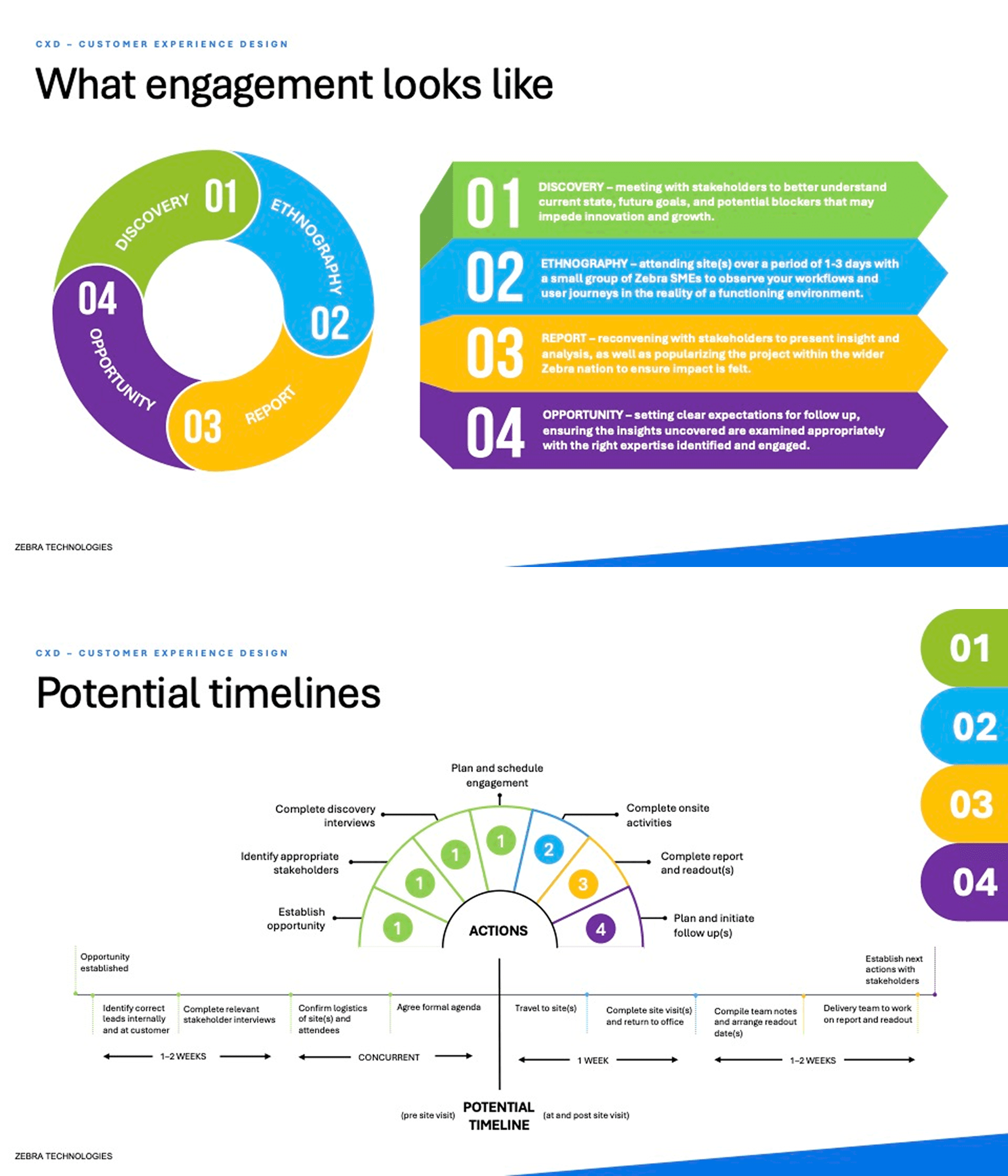
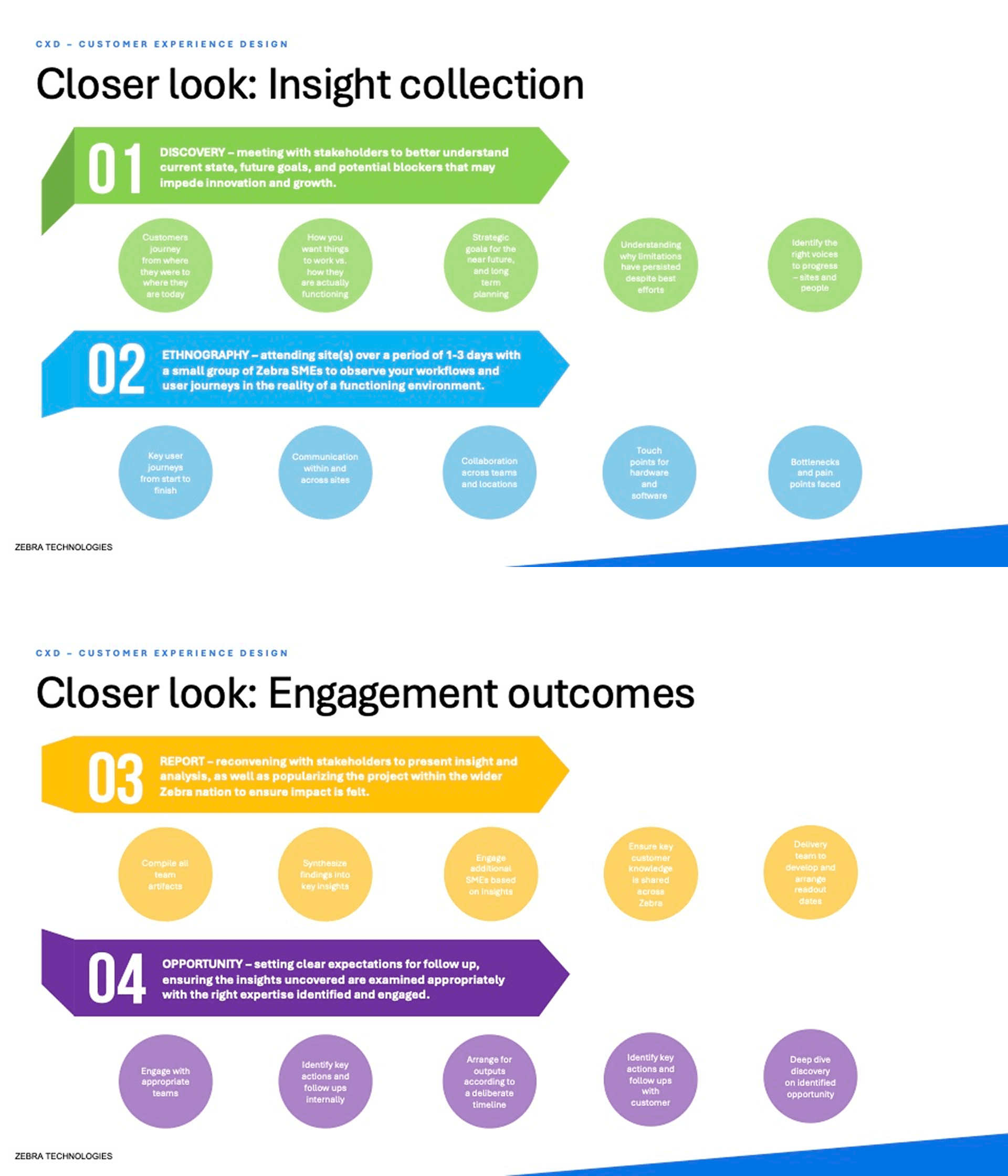
I helped shape Mobility Studies into a clearer, more repeatable model built around Discovery, Ethnography, Reporting, and Opportunity. The process started with stakeholder conversations to understand current state, future goals, and blockers, then moved into site-based observation of workflows and user journeys in functioning environments. From there, the work reconvened around structured analysis, readouts, and follow-up, with the goal of making the insights visible internally and actionable both for Zebra and the customer.
A big part of the work was also defining how this could scale. The program formalized Lite and Full assessments with different scopes, deliverables, timing, and team composition. Lite engagements focused on specific use cases and produced recommendations, next steps, and stakeholder readouts. Full engagements expanded into end-to-end operations, multiple use cases, transformation roadmaps, indicative ROI / cost-benefit analysis, and implementation roadmaps. The model also made cross-functional delivery explicit: account, sales engineering, technology, behavior, industry expertise, workflow analysis, KPI / ROI modeling, and stakeholder management all had a role in the work.
What made the model stronger was not just the process diagram. It was the reflection on what made past studies work: communication, dedicated time on site, the right mix of voices, strong readouts, and clear follow-up. The internal interview work with Zebras across NA and EMEA helped turn hindsight into a more durable framework.
The impact
Mobility Studies turned scattered good work into a more deliberate, consultative research and strategy model.
The framework created a stronger base for customer maturity mapping, implementation roadmaps, key performance baselining, and relationship building. It also tied to meaningful business opportunity: Lite engagements were modeled at roughly 12 annually and Full engagements at roughly 24 annually, with estimated returns of approximately $3m and $9m per year respectively. More importantly, the model improved how Zebra positioned itself, not just as a device vendor, but as a trusted advisor capable of uncovering operational opportunities, expanding portfolio breadth, and supporting broader business outcomes.