
This study was designed to answer a very practical product question: which navigation model would frontline workers actually feel most comfortable using, and why? I led a two-round evaluative study of four navigation concepts, using UX scorecards and comparative testing to understand how different patterns performed on usability, confidence, clarity, and perceived complexity. The goal was not just to pick the “nicest” layout, but to identify which structure best supported fast, confident use in a frontline environment.

The challenge
The product team had multiple plausible navigation directions, but no strong evidence about which one created the clearest, most usable experience for real users.
Navigation decisions can look cosmetic from the outside, but in practice they shape whether users feel oriented, whether functions feel integrated, how quickly tasks can be completed, and how much confidence people have in the system. The scorecard material used in the study made that explicit: appearance, usability, value, confidence and trust, and overall satisfaction were the core rating dimensions, underpinned by broader UX principles like usefulness, usability, findability, credibility, accessibility, desirability, and value. The challenge was to compare the options rigorously enough that the team could make a decision with confidence, rather than defaulting to internal preference or visual taste.
My approach
Treat navigation as a behavioral question, not just a design preference exercise.
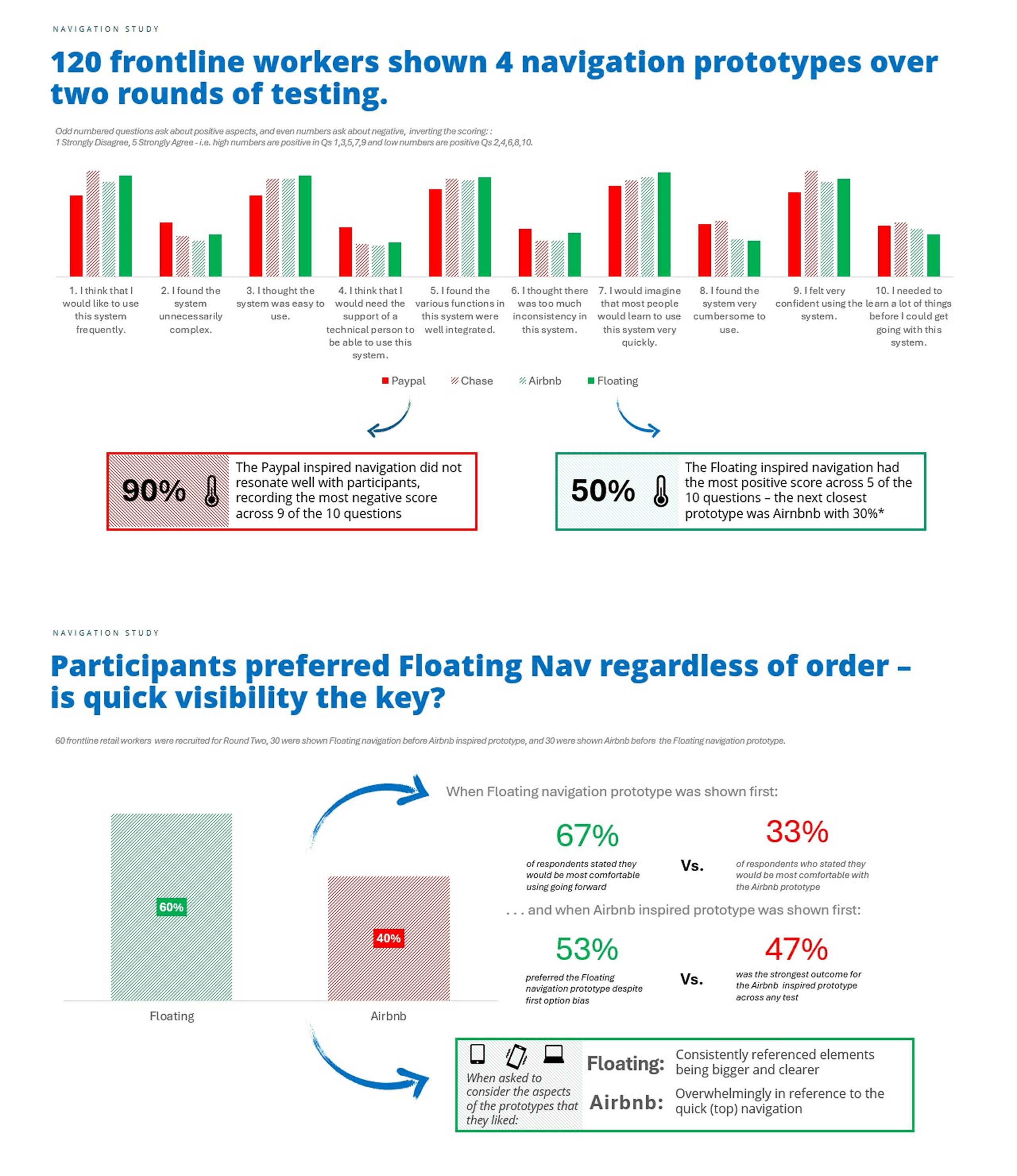
I structured the work across two rounds of testing with 120 frontline workers overall, showing users four navigation prototypes and measuring response through a ten-question UX scorecard. Odd-numbered questions captured positive judgments and even-numbered questions captured negative judgments, creating a more balanced view of frequent use, ease, integration, complexity, confidence, and learning burden. The study compared multiple patterns, including PayPal-inspired, Chase-inspired, Airbnb-inspired, and Floating navigation concepts, and then used a second round to isolate order effects more carefully between the strongest-performing options.
Round Two was especially important because it moved beyond simple preference into comparative confidence. Sixty frontline retail workers were split so that half saw Floating first and half saw Airbnb first, helping control for first-option bias. That let the study answer a more useful question than “which mock looks better?” It asked whether the preference still held once ordering effects were accounted for, and what users were actually noticing in each concept. The comments mattered as much as the numeric preference: Airbnb was consistently associated with elements being “bigger and clearer,” while Floating was strongly associated with quick visibility through its top navigation.
The impact
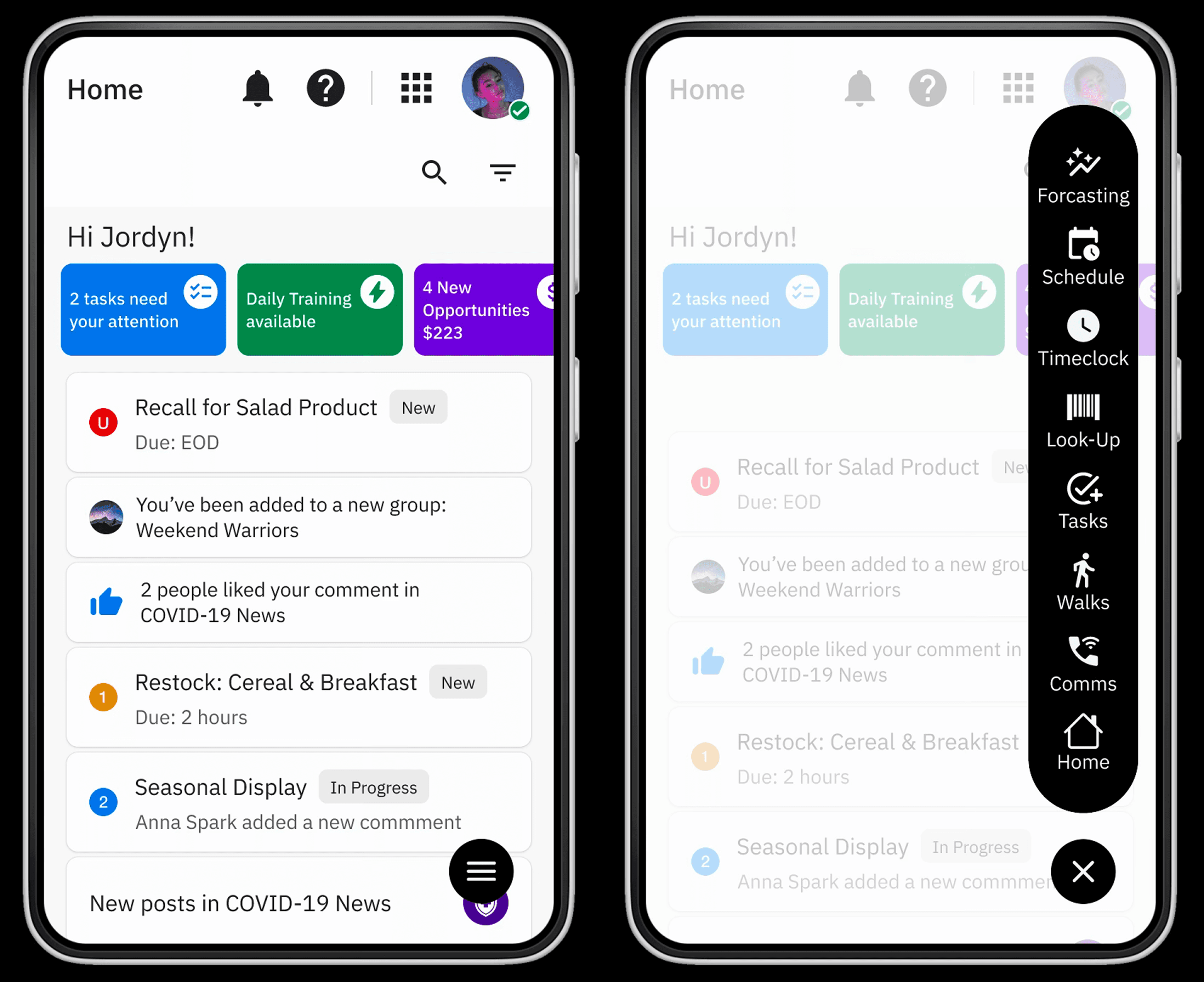
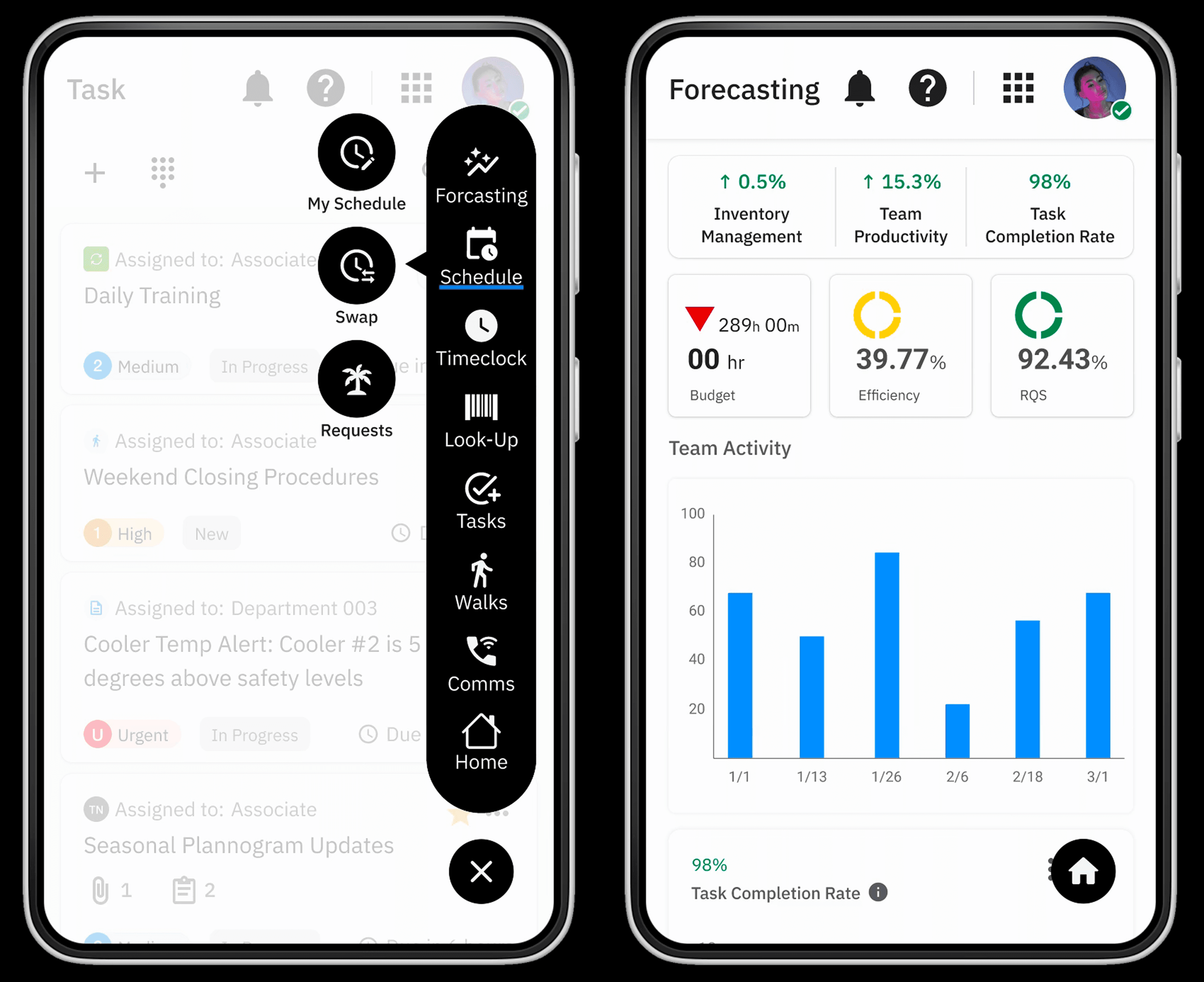
The study gave the team a clearer design decision: users consistently preferred Floating navigation, and the likely reason was immediate visibility.
Across the broader prototype comparison, the PayPal-inspired navigation performed worst, recording the most negative score across 9 of the 10 questions. By contrast, the Floating navigation scored most positively across 5 of the 10 questions, with the next-closest competitor being Airbnb at 30%. In the direct Round Two comparison, Floating still came out ahead regardless of order: when shown first, 67% of respondents said they would be most comfortable using it going forward versus 33% for Airbnb, and even when Airbnb was shown first, Floating still won 53% to 47%. That pattern mattered because it suggested the preference was not just novelty or sequence. It pointed to a real usability advantage, likely tied to the speed and visibility of the navigation itself.
What the study ultimately provided was not just a winner, but a rationale. Bigger, clearer elements mattered, but quick access and immediate top-level visibility appeared to matter more. That gave the team a more defensible basis for choosing a navigation direction and showed how lightweight comparative research could reduce uncertainty on a design decision before the product became too attached to one answer.