
This study looked at a problem that cuts across industries: people rely on work notifications to stay informed and act quickly, but too many poorly structured alerts make it harder to know what actually matters. I led a mixed-method study across healthcare, manufacturing, and retail to understand how workers receive, prioritize, and respond to notifications, then translated the findings into a clearer notification hierarchy and dashboard concept for Zebra.
The challenge
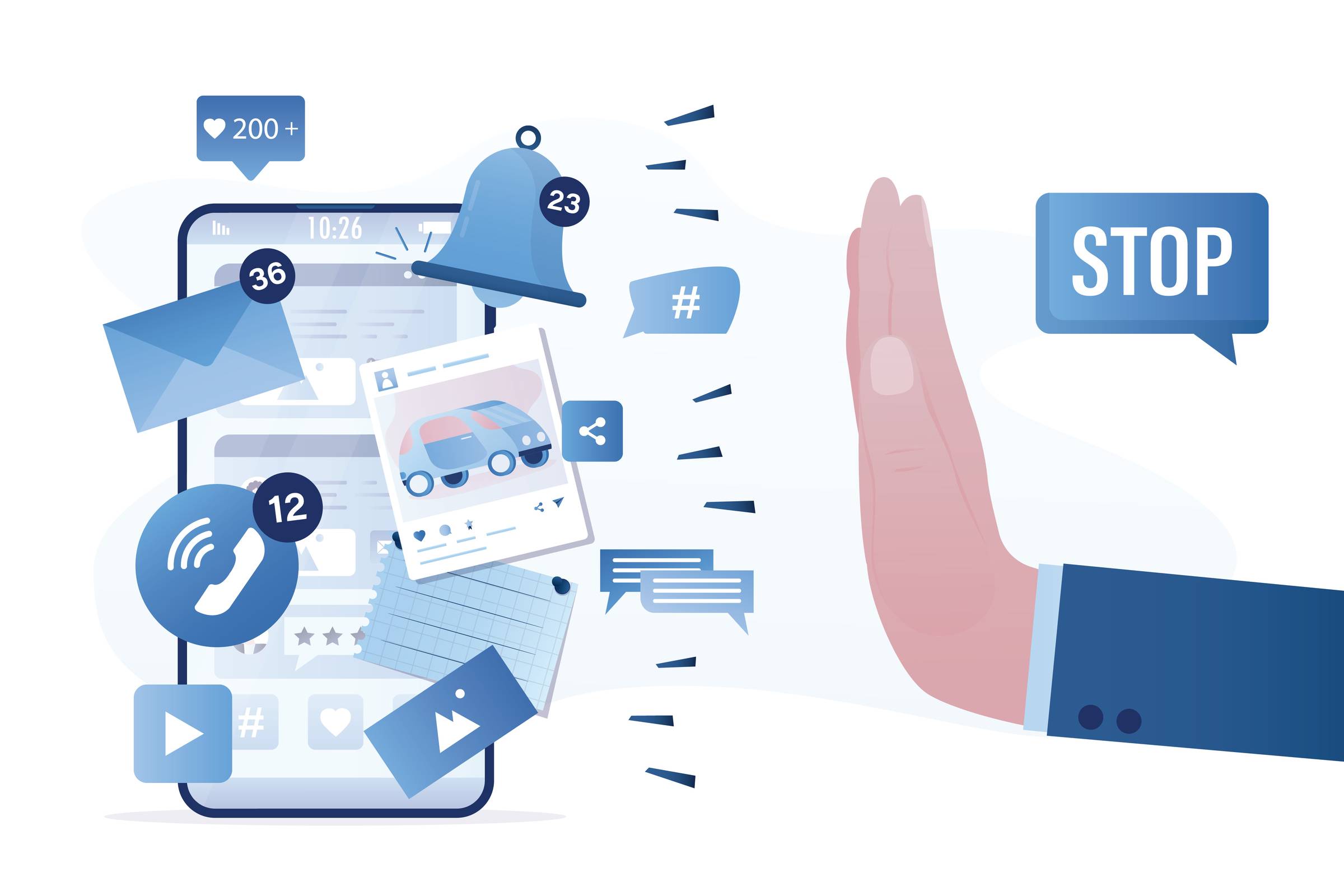
The goal was not just to ask whether people like notifications, but to make them useful enough to drive action.
The work started with a broad set of questions: what differentiates active versus passive notifications, how notification needs differ across industries and roles, how delivery changes across devices and platforms, and how Zebra could better manage notification fatigue internally. Early literature review and SME interviews pointed to the same tension: urgency varies widely, but most systems do a poor job of reflecting that. Healthcare was especially instructive because alarm fatigue is already well understood there, but similar issues were also showing up in manufacturing and retail, where workers deal with time-critical tasks, multiple channels, and a wide mix of device types.
My approach
Start by understanding the current notification landscape, then turn that into a practical prioritization model.
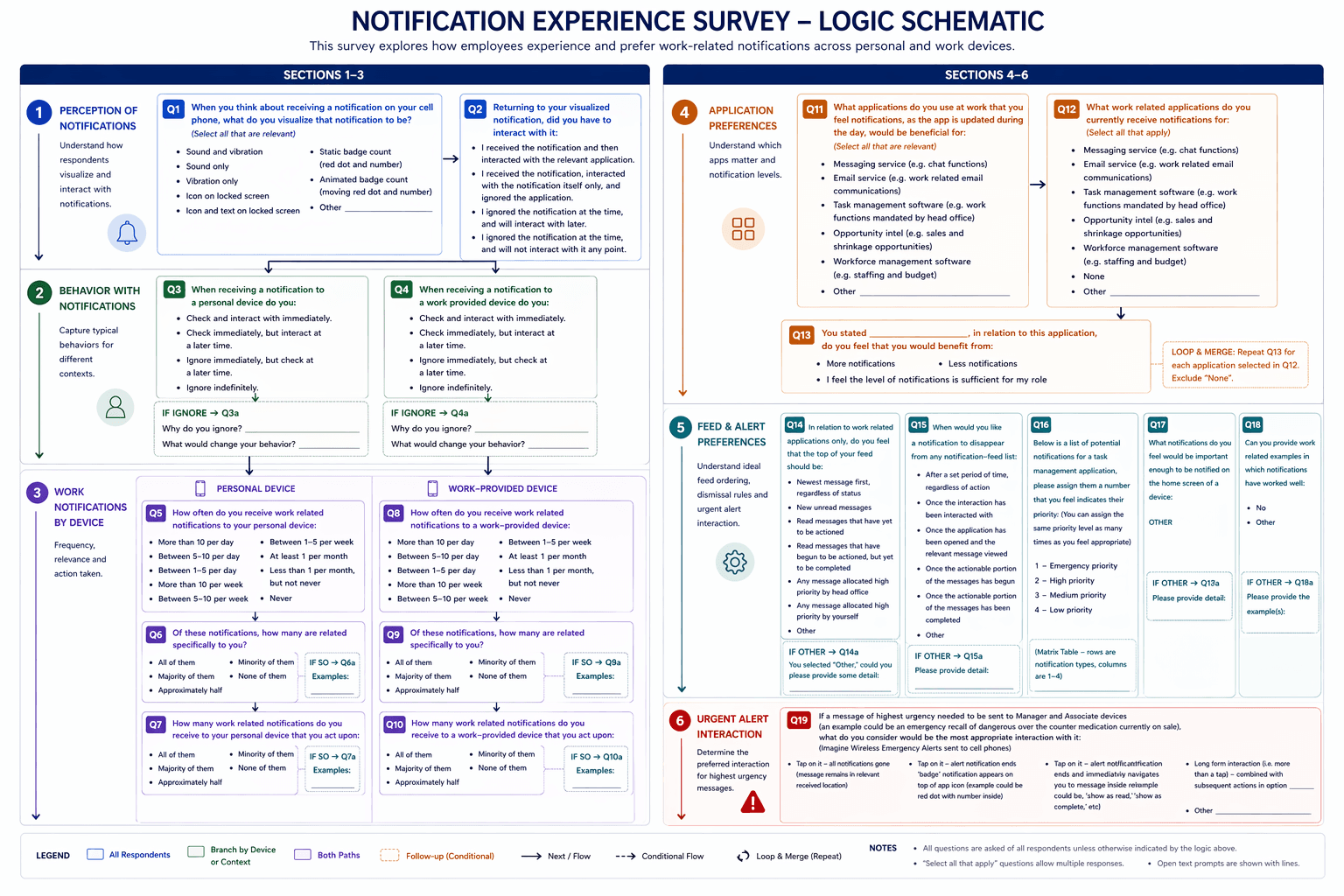
I structured the work in three parts: secondary literature review, one-on-one SME conversations, and an unmoderated UserZoom survey spanning healthcare, manufacturing / transportation / logistics, and retail.
The survey itself was designed to get beyond generic opinion and into actual notification behavior:
What people visualize when they think of a notification?
Whether they act immediately or defer?
How many work notifications they receive on personal versus work devices?
Which they consider pressing?
Which applications would benefit from notifications?
How feeds should prioritize read versus unread and urgent versus deferrable items?
What kinds of alerts belong on the home screen at all?
The sample covered healthcare participants, manufacturing / transportation / logistics, and retail. That mix made it possible to compare urgency, device ecosystems, and customization preferences across very different work environments.
I also made sure the study stayed focused on decision-ready questions:
How much urgency actually exists?
Where fatigue is most likely?
Whether people want one device or many?
How much customization matters?
What a useful hierarchy should look like if Zebra were to consolidate notifications more intelligently?
The impact
The study showed that the core problem was a lack of structure. Workers needed better prioritization, clearer hierarchy, and fewer fragmented channels.
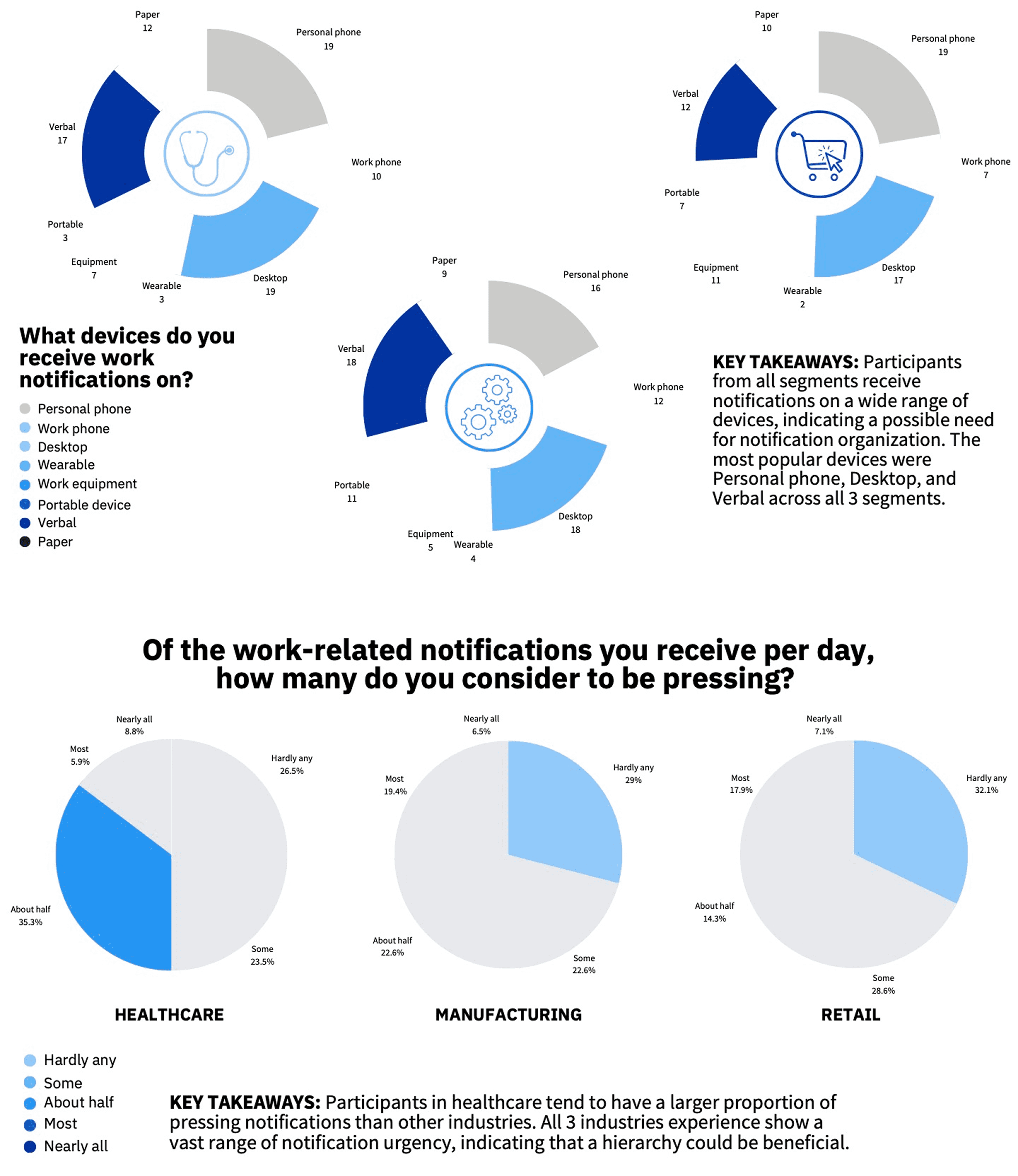
Several patterns stood out. Across all three verticals, participants received work notifications through a wide range of channels, with personal phone, desktop, and verbal notifications consistently among the most common.
Healthcare participants reported a somewhat higher share of pressing notifications than the other groups, but all three industries showed a broad spread of urgency, reinforcing the need for hierarchy rather than a flat alert stream.
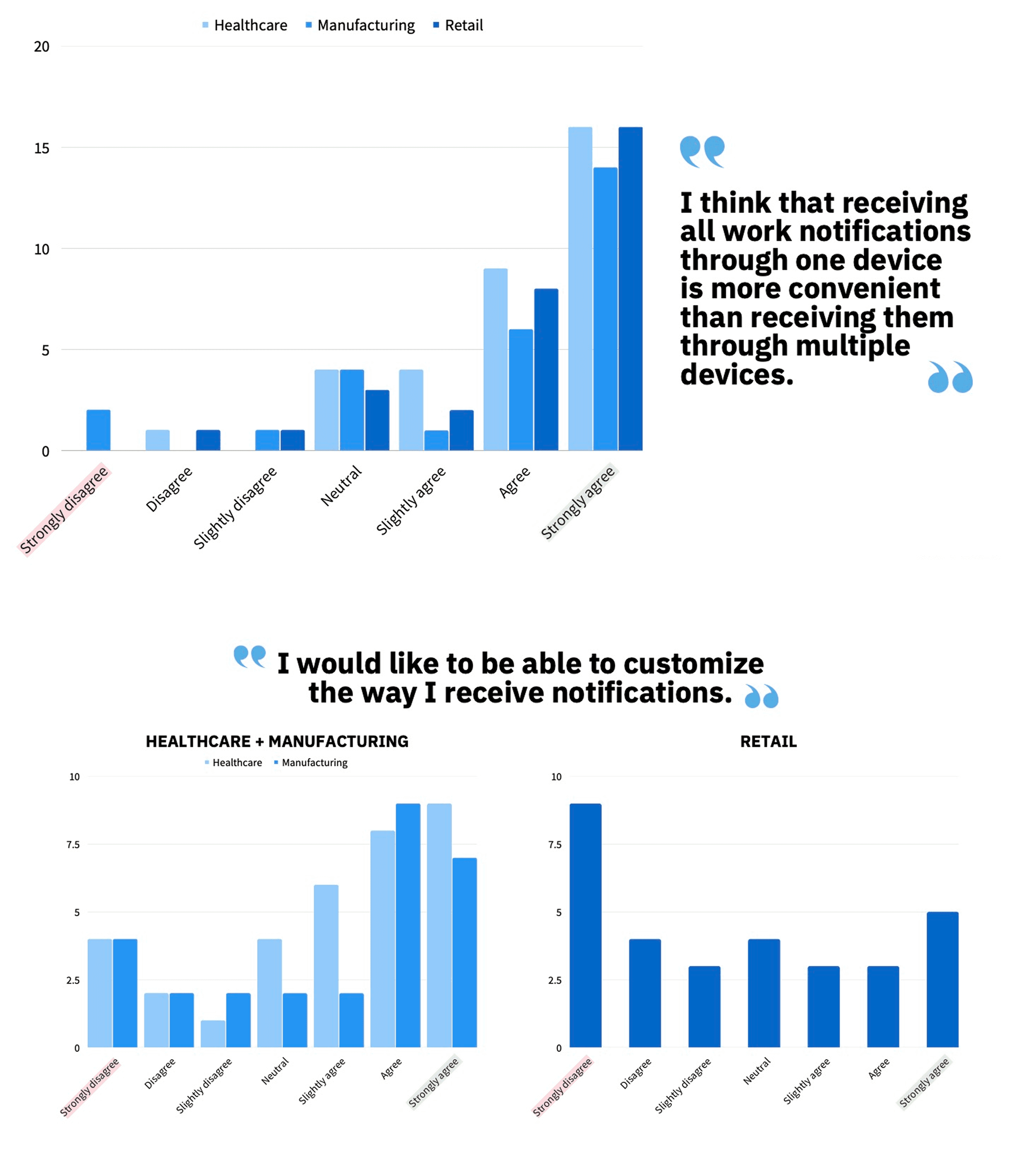
Most users also preferred receiving work notifications through one device rather than many, as long as that did not create even more overload.
Healthcare and manufacturing respondents leaned more strongly toward customization, while retail respondents were more likely to say the current system already worked adequately.
Those findings led to a practical proposal: a centralized notifications dashboard on the Zebra portal homepage that could bring notifications from multiple devices and channels into one place and organize them hierarchically. The proposed framework cut notifications across two dimensions (action versus information, and time-sensitive versus deferrable) creating four clearer tiers instead of one undifferentiated stream.
That turned the project from a broad exploration of workplace alerts into a much more actionable design direction: consolidate where possible, prioritize visibly, and reduce fatigue by helping people distinguish what needs immediate action from what simply needs awareness.